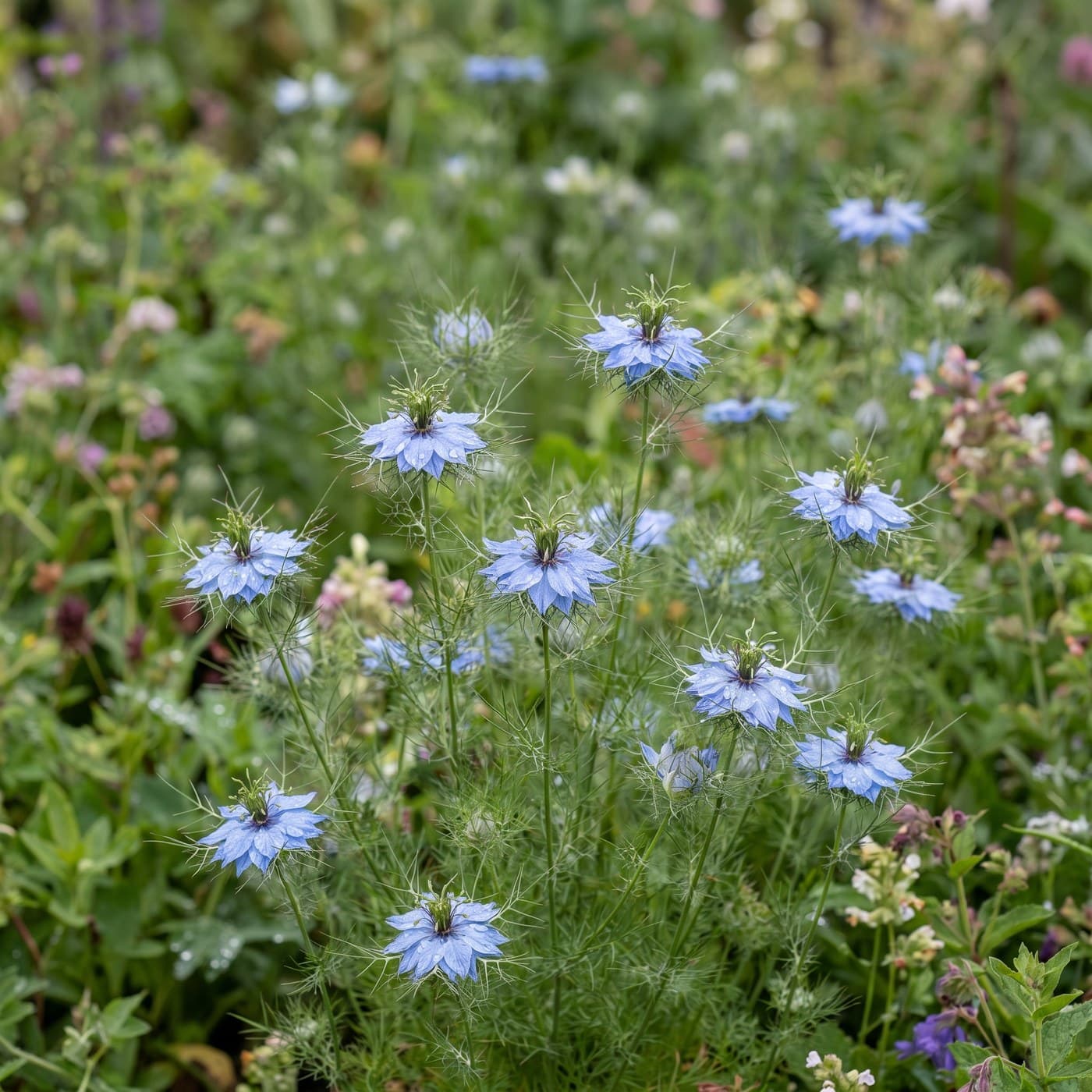
Love-in-a-Mist Seed Pack
Nigella
Sky-blue stars that re-sow themselves every year.
1,000 seeds per pack · one-off purchase, no subscription
Buy now- 1,000 seeds, hand-packed in a labelled inner packet with a printed quick-start card
- Dispatched within 1–3 business days, tracked, to any UK address
- Germination guarantee: if they don't sprout, we send them again
Why grow it
- Sow once, direct in the ground this October — autumn plants flower earlier and fuller than spring ones
- Two crops from one plant: sky-blue flowers for the vase, then striped balloon seed pods people dry for winter arrangements
When to sow
Sow by mid-October, direct where it will flower — then it re-sows itself.
| Scotland & the North | Sow straight away — the northern window is closing; cover with a cloche or fleece through the first frosts |
|---|---|
| Midlands, Wales & Northern Ireland | Sow now — by mid-October |
| South of England | Sow by mid-October (mildest South West: to late October) |
Growing questions
Does it really come back by itself?
Reliably, yes — as long as you resist tidying. Leave the seed pods on the plant until they brown and split, and the seed falls exactly where next year's patch should be. If you want it elsewhere, snap a dry pod over the new spot like a salt shaker.
How do I sow it in autumn?
Direct, where it will flower: rake, scatter, cover very lightly, water once. It resents transplanting, so skip pots and modules. Autumn soil gets it up in two to three weeks, and the ferny seedlings overwinter without protection.
What are the balloon pods for?
They're the second harvest. The inflated, striped pods dry perfectly and hold their shape for months — cut a bunch for winter vases before the rest split and self-seed. Half the people who grow nigella end up growing it for the pods.
Is it good for cutting fresh, too?
Yes — the flowers sit in that haze of fine green filigree that makes a jam-jar posy look arranged without any effort. Autumn-sown plants give longer, stronger stems.